Finixa
DETAILS
Mobile-first personal finance web app — expense tracking, envelope budgeting, and recurring transactions.
Git RepositorySTACK
- Nuxt 4
- TypeScript
- Supabase
- Capacitor
- Deno (Edge Functions)
Logging an expense in under five seconds from your phone — the one constraint that drove every decision in Finixa, from the PostgreSQL schema down to the input gesture.
What's the context behind Finixa?
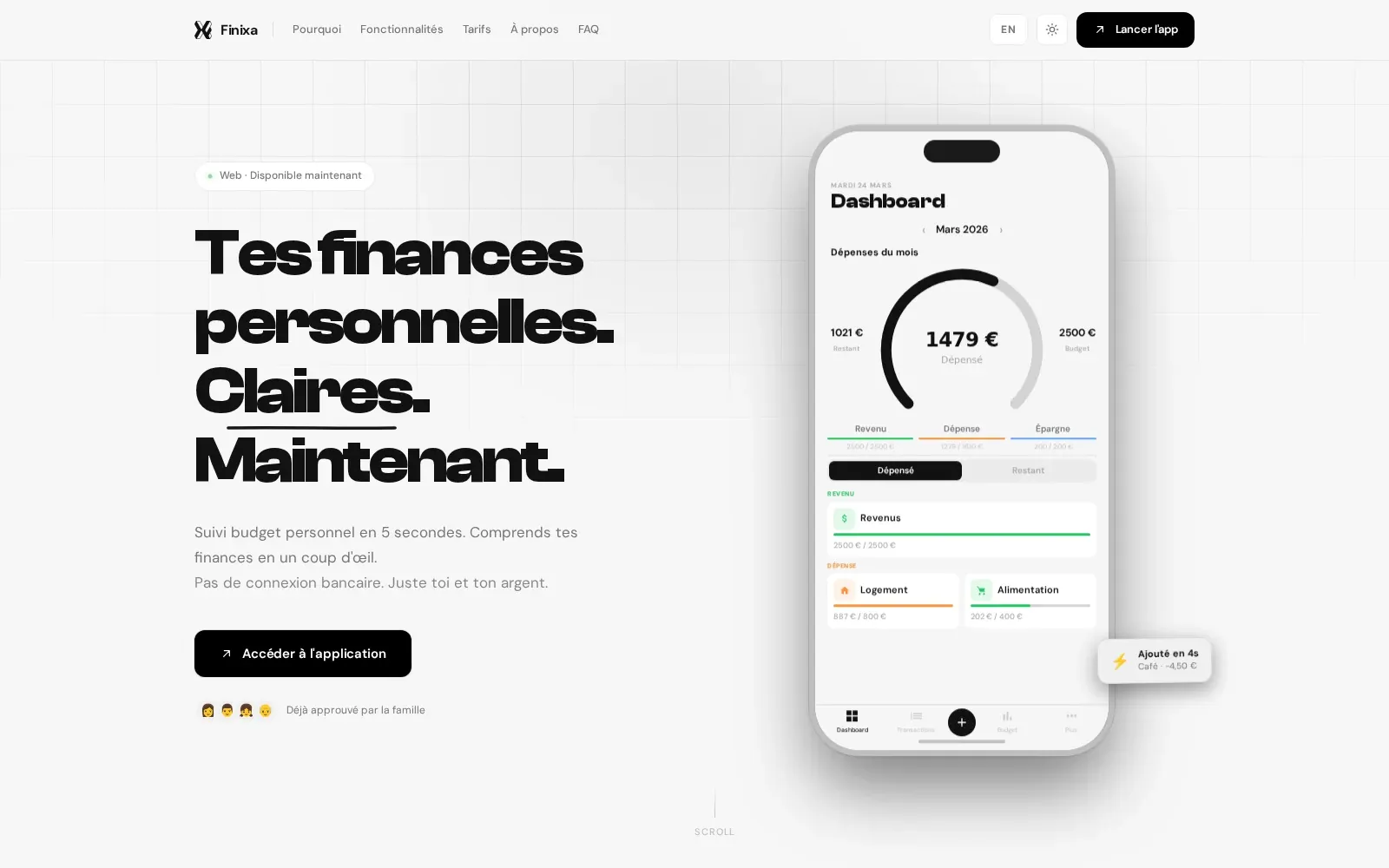
Finixa is a personal finance SaaS MVP built around one hard UX constraint: add an expense as fast as possible from a mobile device. It covers expense and income tracking, per-category and per-subcategory budgeting, envelope budgeting (50/30/20), virtual recurring transactions, and monthly statistics backed by PostgreSQL RPCs. The app is packaged for iOS/Android via Capacitor in addition to the web deployment.
What's the tech stack?
- Nuxt 4 + Vue 3 (SPA, hash routing) — SSR is intentionally disabled: hash-based routing is required for Capacitor compatibility, as the
capacitor://scheme does not support push-state routing. - Strict TypeScript — Amounts are signed at the database level (
-50= expense,+1000= income). The central discriminant isTransactionType ('depense' | 'revenu' | 'epargne'), used consistently from the database schema up to UI components. - Pinia (15 stores) — Three-layer architecture:
app/services/isolates all Supabase calls, stores hold state and expose mutations, pages and components consume stores. No direct Supabase calls in components. - Supabase (PostgreSQL + Auth + RLS) — Row Level Security on every table. Computed views (stats, virtual recurrences) are PostgreSQL RPCs called directly from the service layer.
- Edge Functions (Deno) — Four serverless functions for external integrations: quick transaction insertion via API key, daily digest, push notifications, category listing endpoint.
- Custom SCSS (token-based design system) — No Tailwind. Design tokens are auto-injected into every component via
additionalDatainnuxt.config. Components use only semantic CSS custom properties. - Capacitor 8 — iOS/Android packaging,
@capacitor/preferencesfor secure local storage (PIN, theme, onboarding state). - @nuxtjs/i18n — Full FR/EN localization,
no_prefixstrategy compatible with hash routing.
Notable Technical Points
1 · Transaction add flow
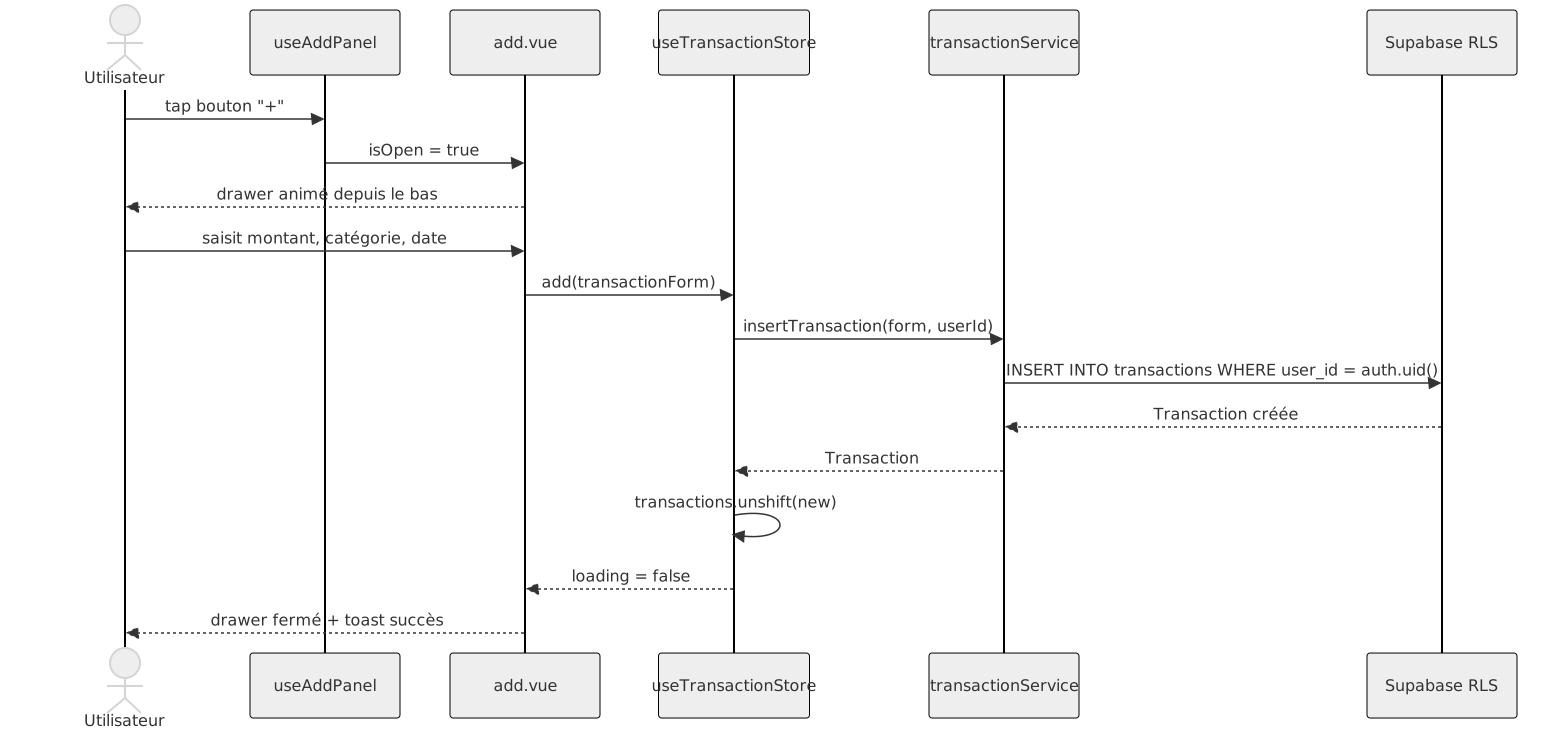
The full sequence from button tap to reactive UI update — the layer separation in action. add.vue only knows the store, the store only knows the service, the service only knows Supabase.
2 · Operation date vs accounting date
Each transaction has a date (when the operation occurs) and a nullable accounting_date (when it is attributed to the budget). For recurring transactions with accounting_offset: 'next_month', the accounting date is set to the 1st of the following month at materialization time. Concrete use case: a subscription debited on December 28th but counted against January's budget.
3 · Subcategory budget versioning
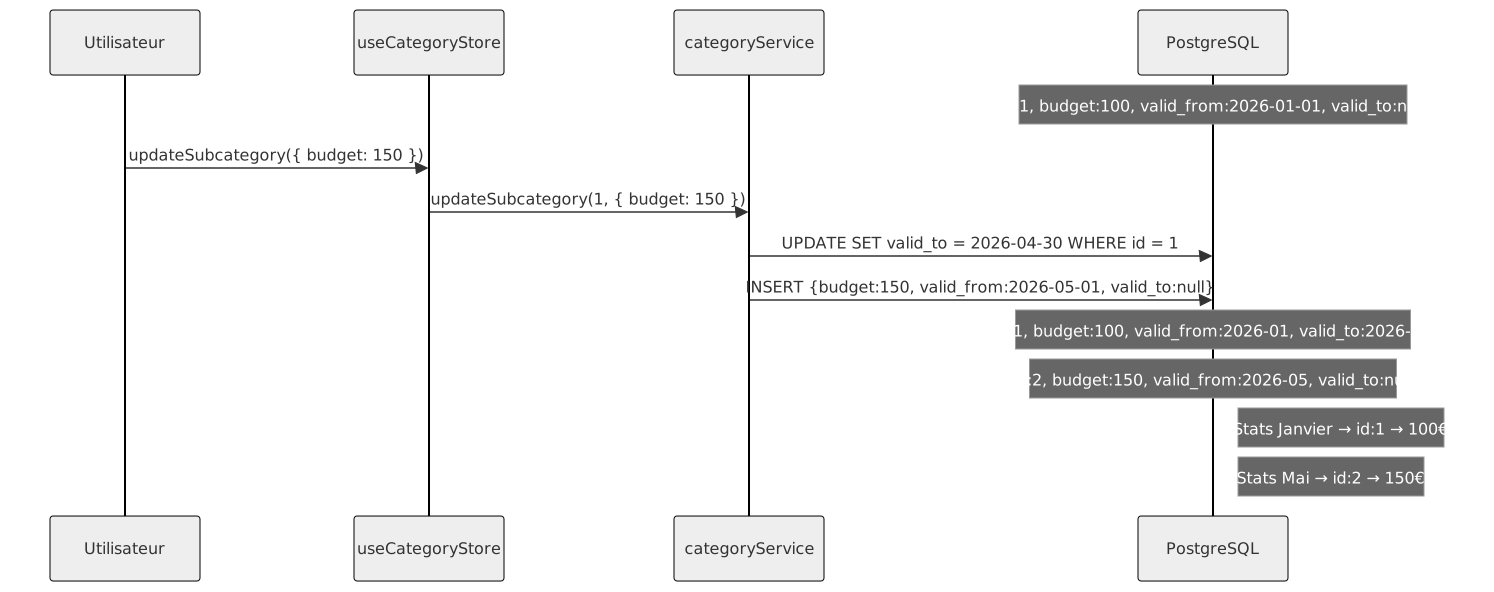
Editing a budget does not rewrite history: a new row is created with valid_from, the old one is closed with valid_to. Stats queries use the date to find the budget that was in effect at that point in time — January statistics remain accurate even if the budget changed in May.
4 · Virtual recurrences and lazy materialization
Recurring transactions are not persisted in the database by default. On every load, getDatesInRange() computes occurrences for the current period and getOccurrenceKey() generates a stable identifier. Only unmatched occurrences are shown as "virtual" rows. Persistence only happens when the user checks off an occurrence.
getDatesInRange() handles day-of-month clamping (e.g., monthly on the 31st → Feb 28/29) and all edge cases for weekly, quarterly, and yearly frequencies.
5 · PostgreSQL RPCs for all aggregations
No stats logic on the frontend. All computed views are SQL functions: get_subcategory_stats, get_variable_daily_remaining, recurring_virtual_for_month, etc. Called via supabase.rpc() from the service layer.
6 · API key system for external integrations
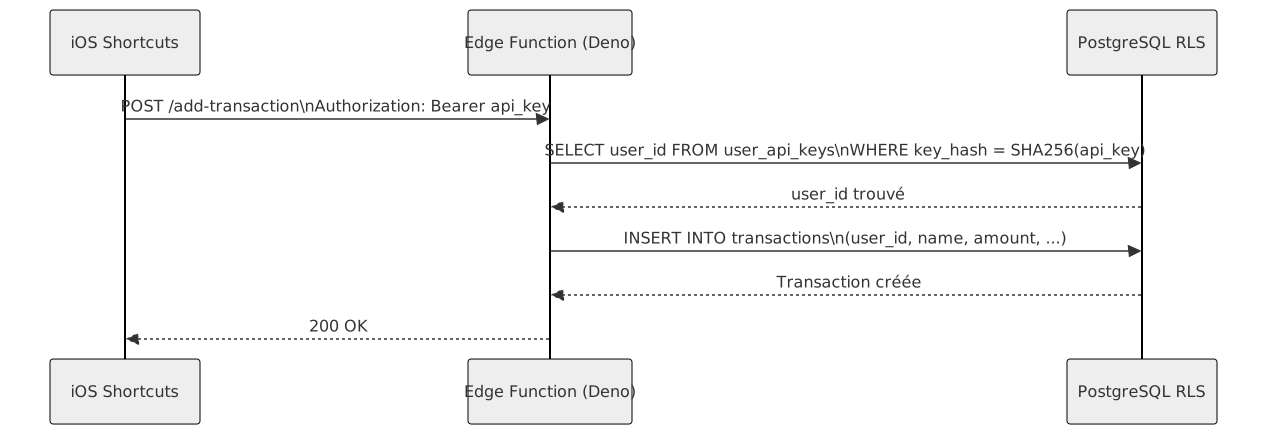
Deno Edge Functions expose endpoints authenticated via a SHA-256 hash of a user-generated key. This allows adding a transaction from an iOS Shortcuts automation without exposing Supabase credentials.
SCSS Design System
Tokens are defined in two layers: a primitive palette (never referenced directly in components) and semantic CSS custom properties (the only layer components may use). The token file is auto-injected into every <style lang="scss"> block via additionalData in nuxt.config.ts — no manual imports needed.
What I Learned / Contributed
The most challenging part was the recurring transactions engine: computing stable virtual occurrences over any arbitrary time window, with day-of-month clamping (e.g., monthly on the 31st → Feb 28/29), while cleanly handling the split between operation date and accounting date. Budget versioning required rethinking the schema so that stats queries are deterministic regardless of which historical period is queried.
Diagrams
Global architecture

Transaction add flow
Operation date vs accounting date

Budget versioning
Virtual recurrences

API key authentication flow
SCSS design system
